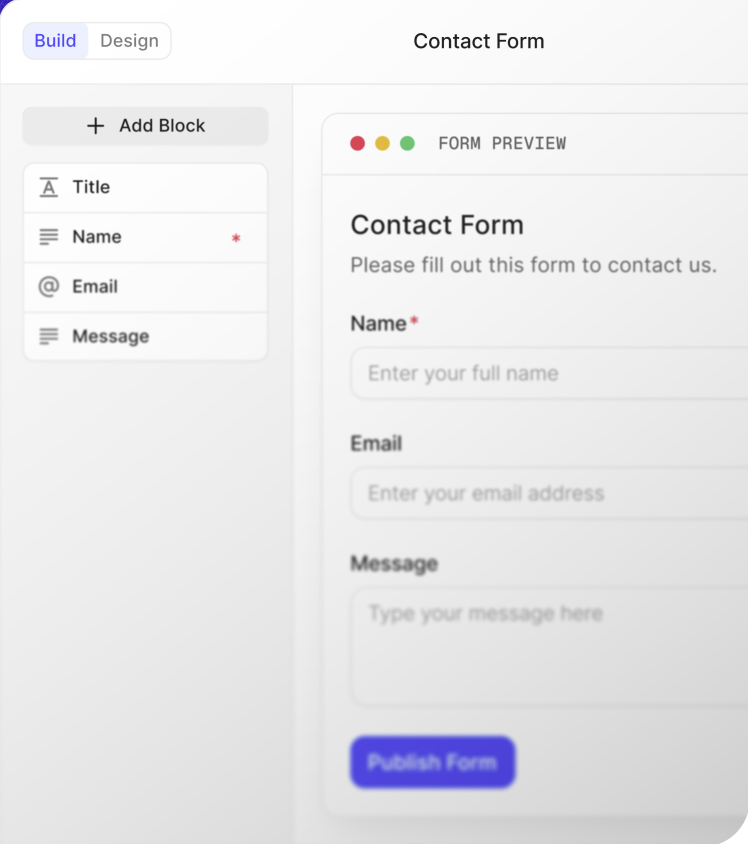
Single page forms suit short requests where people can see the whole task at a glance, like contact forms or RSVPs. Multi page forms win when your form runs long, branches into different paths, or stages sensitive questions after easier ones. The right choice depends on length, logic complexity, and audience.
What a single page form does best
A single page form puts every field on one screen with one submit button. Nothing hides behind a Next button, so respondents can scan the full effort before starting. That visibility matters most when the request is small and expected.
- Five fields or fewer, such as name, email, and message.
- Repeat visitors who fill similar forms often and want speed.
- Simple internal requests like supply orders or room bookings.
- Situations where people compare options while filling in answers.
When a multi page structure earns its keep
Splitting a form into pages changes how effort feels. Each step asks for one related group of answers, progress becomes visible, and heavy questions arrive only after people have invested time. For anything longer than a quick hello, that staging keeps completion moving.
- Applications and registrations with more than six or seven fields.
- Branching paths, where early answers decide later questions.
- Sensitive topics staged after rapport questions instead of leading.
- Fields that need lookups, like policy or reference numbers.
The decision table
| Factor | Single page | Multi page |
|---|---|---|
| Best length | Under 7 fields | 8 fields and up |
| Branching logic | Gets messy fast | Clean per-step branches |
| Mobile scrolling | Long thumb work | Short focused screens |
| Perceived effort | All visible up front | Grows step by step |
| Upkeep | One screen to edit | More pages to maintain |
A middle path most builders never offer
SharaForms treats layout as a presentation choice rather than a rebuild. The same form can run as Classic multi page steps, Focused single question screens, or Spotlight, which keeps every question visible on one page while highlighting the active one. Switch between them any time without touching your fields or logic, then judge results instead of guessing.
Templates to start from
Frequently asked questions
- Do multi step forms really get higher completion rates?
- For long forms they usually do, because splitting reduces perceived effort and progress bars reward momentum. Short forms often perform equally well or better on one page, since extra clicks add friction. Test with your own audience rather than copying a benchmark from a different use case.
- How many fields should sit on one form page?
- Two to five related fields per page works for most audiences. Group by topic so each step reads as one idea, like contact details first and requirements second. Pages holding a single unrelated field feel slow, so merge those unless the question needs privacy or triggers a branch.
- Can I switch an existing form between layouts?
- Yes. SharaForms separates content from presentation, so Classic, Focused, and Spotlight modes reuse the same fields and logic. You can publish one layout today, flip to another next week, and compare completion numbers without rebuilding anything or duplicating the form.
Put this to work on a real form
Free plan, unlimited forms and submissions, all three presentation modes included.